

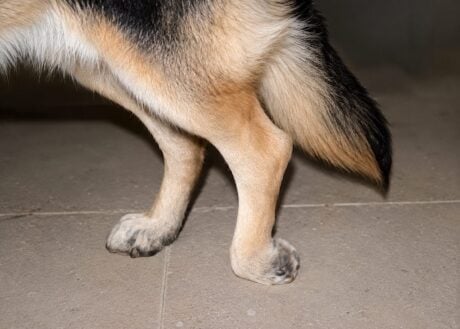
Twenty years ago, there wasn’t a “toe-up device” category. There was simply a problem.
Dogs with neurologic injuries were dragging the tops of their paws, wearing through their nails and skin, and struggling to clear the ground when walking. Clinicians relied on bandaging, protective boots, and other improvised solutions to reduce trauma. These approaches protected the paw, but they little to place the limb properly or help dogs walk. wrapping the paw, applying protective boots, and in some cases, amputating the limb.
The gap is what led me to develop the first dorsiflexion assistive device.
The backstory
The original Thera-Paw boot was designed in collaboration with orthopedic surgeons, Sean Aiken, DVM, MS, DACVS and Chris Hunt, BVSc, DACVS, as an alternating to bandaging for paw injuries. It’s a durable boot with a thick, padded sole, which makes it especially useful for comfort and protection.
Veterinary neurologists began turning the Thera-Paw boot upside down so the padded sole covered the dorsal surface of a paw as it was being dragged. It was creative and practical but not ideal. The boot protected the skin but did nothing to improve paw placement and clearance. I set out experimenting to find ways to add functional assistance. The first prototype used bookbinder rings secured to the boot with thermoplastic, elastic resistance bands, and a custom thermoplastic cuff positioned higher on the limb. This early design helped position and lift the paw during swing phase and became the foundation what we later called the Dorsi-Flex Assist.
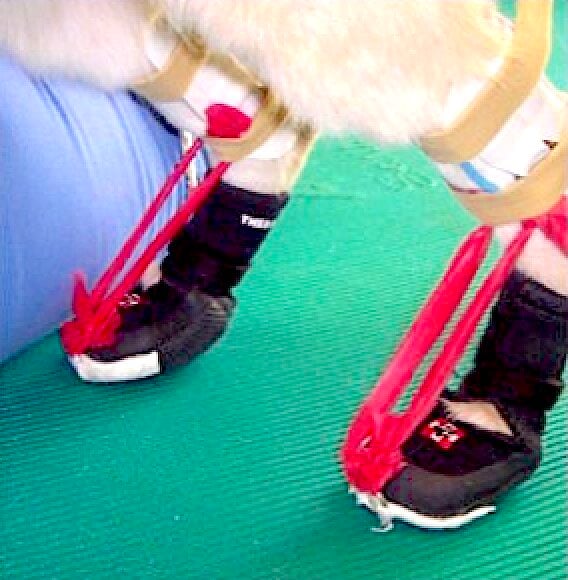
I began refining the design, testing different boot brands, points of attachment, materials, strap lengths, and configurations. I added rings to some boots and sewed toe straps onto others where materials were too soft to support hardware.
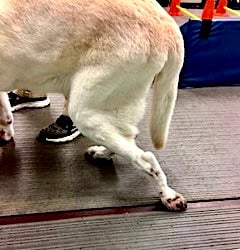
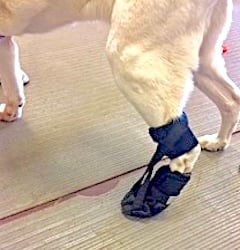
Requests for increasingly complex cases soon followed. We fabricated devices for dogs of every size, cats, and even a kangaroo and a guinea pig with SCI. Though we could find boots to accommodate most patients, some were too small, weak, or anatomically unusual, so we fabricated the paw components ourselves.
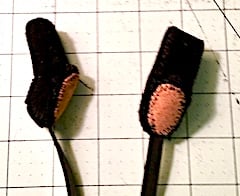
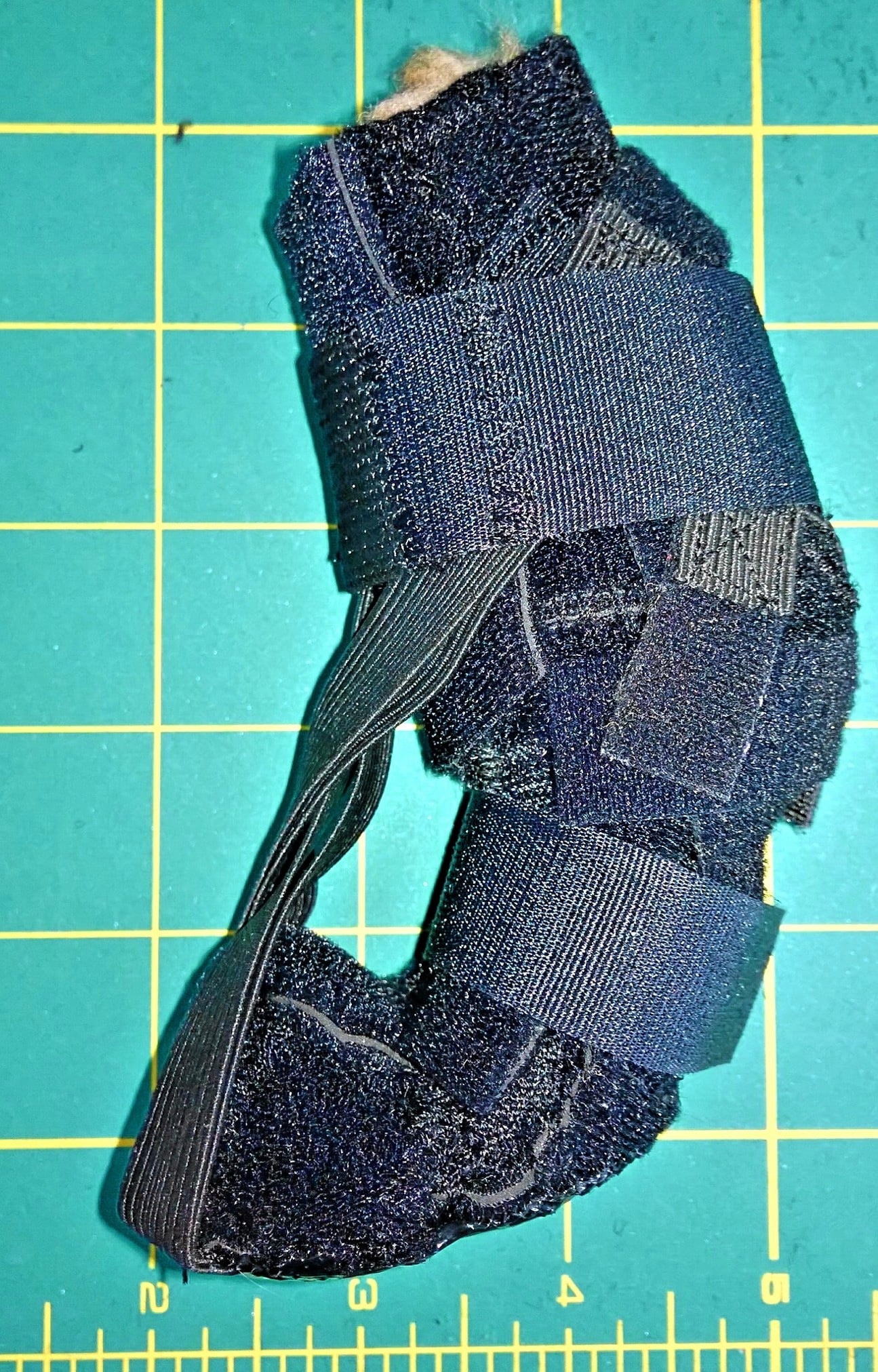
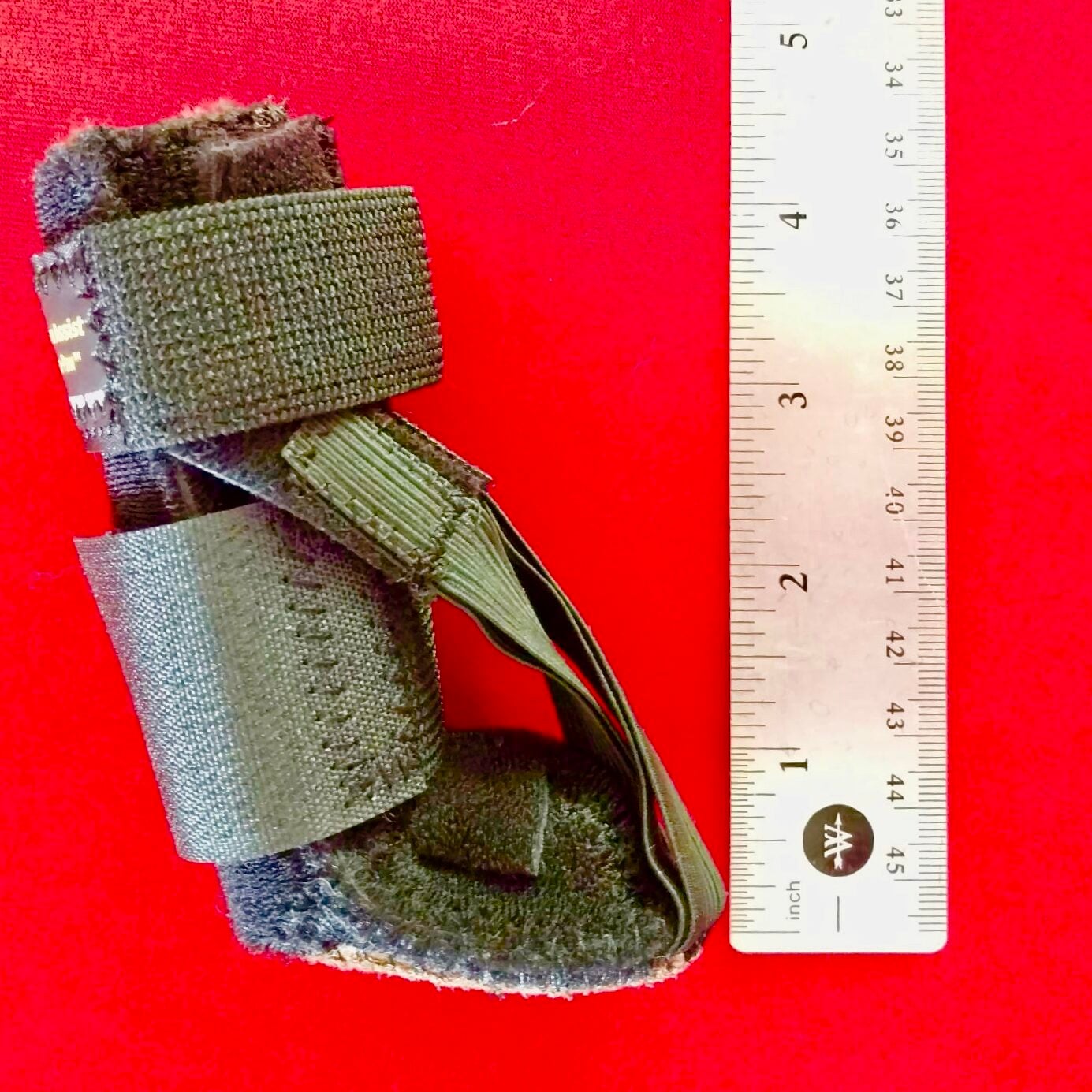
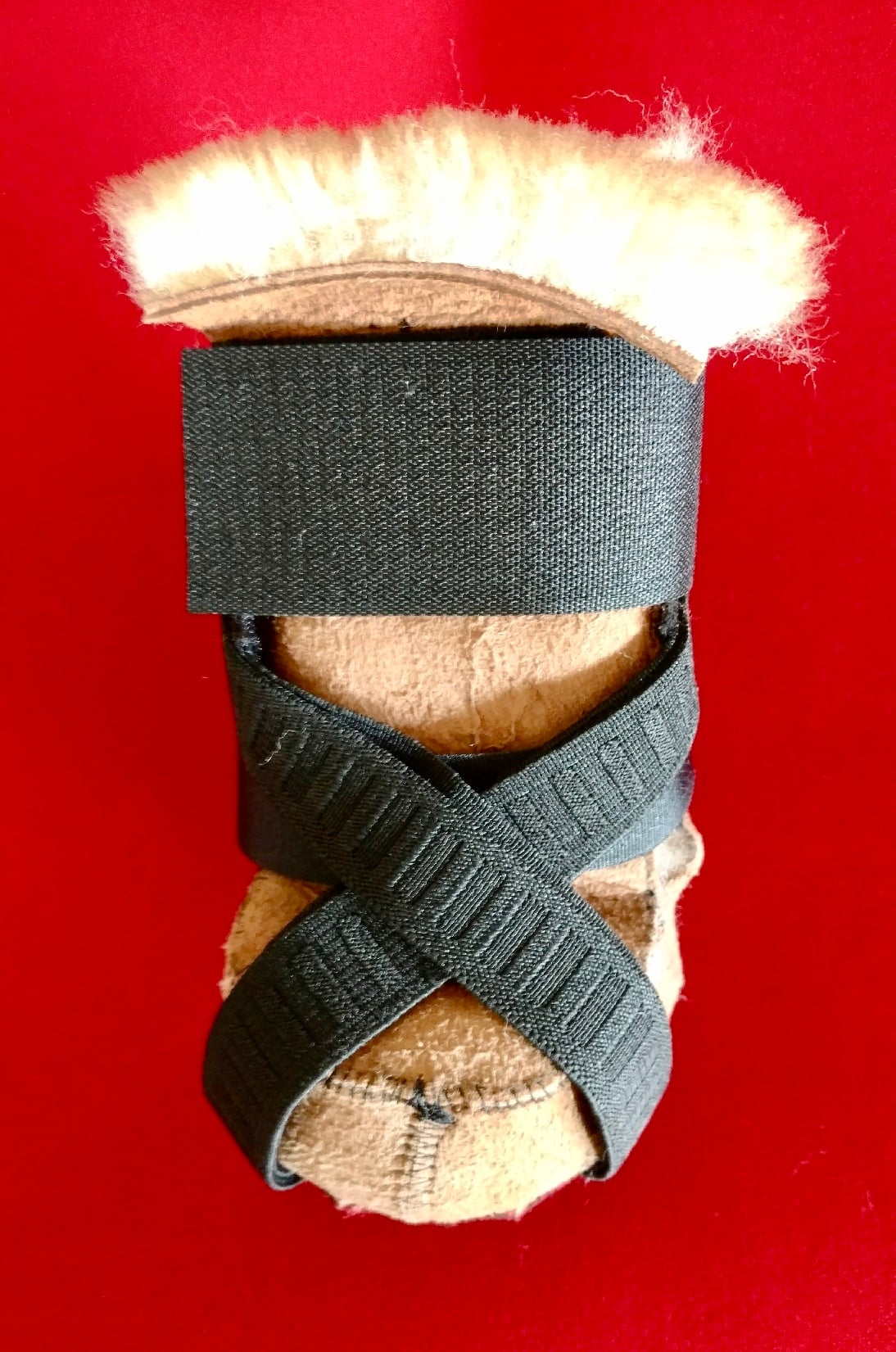
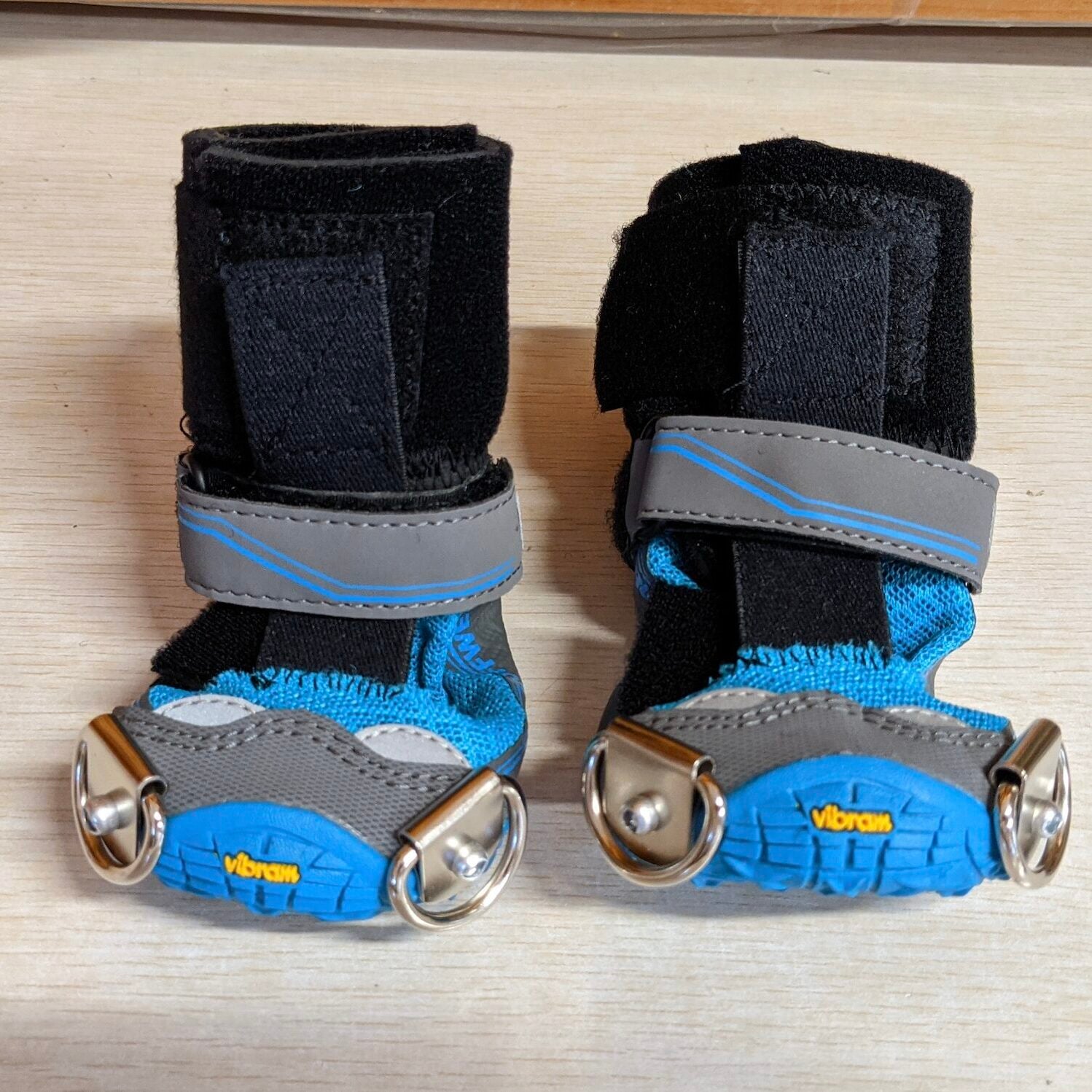
Over time, the devices became lighter, more streamlined, and easier to apply/remove. Today, I most commonly use both Thera-Paw and Ruffwear boots for many of the Dorsi-Flex Assist devices, selecting the boot and configuration according to the patient’s size, strength, anatomy, diagnosis, prognosis, and current functional needs.
Now clinicians have more choices than ever before, for the hind limbs and, finally, for forelimbs too. That’s the good news. The challenge is that more choices can make selecting the right device more confusing.
My goal with this guide is not to name one universally “best” product. It’s to help clinicians understand how different toe-up devices work so they can better match the device to the patient in front of them.
Toe-Up Practical Guide – 2026
| Vital Vet — Toe-Up & Anti-Knuckling Device Buyer’s Guide (2026) | ||||
| Companion to “Toe-Up Devices for Pets: A 2026 Evidence-Based Review.” Grouped by limb, then technique. Confirm current price and availability with the seller before recommending. | ||||
| Device | Category | Mechanism / design | Best-fit patient | Where to buy |
|---|---|---|---|---|
| HINDLIMB DEVICES | ||||
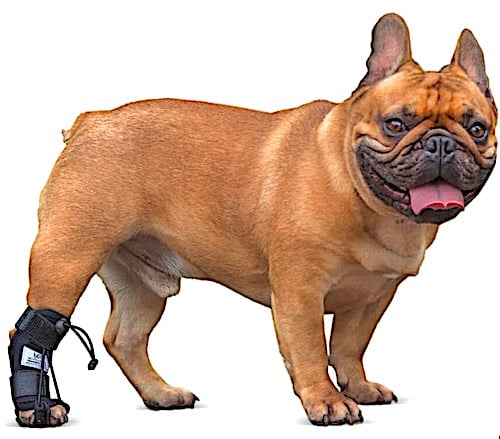 No-Knuckling Training Sock No-Knuckling Training Sock | Training sock (reflex) | Ultralight cord under the paw triggers the flexor-withdrawal reflex; paw uncovered. | Mild scuffing with good proximal drive; 2–5 min retraining bouts. | walkinpets.com |
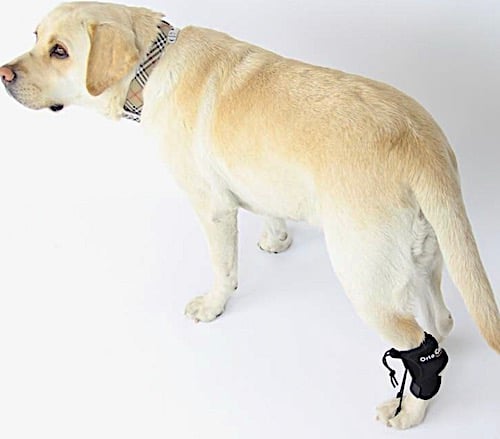 Proprioceptive Corrector (No-Knuckling Sling) Proprioceptive Corrector (No-Knuckling Sling) | Elastic sling | Elastic cord supports the 2 central toes to a hock strap; paw uncovered. | Mild–moderate; ≤ ~2 hr wear, check skin every 15 min. | ortocanis.com |
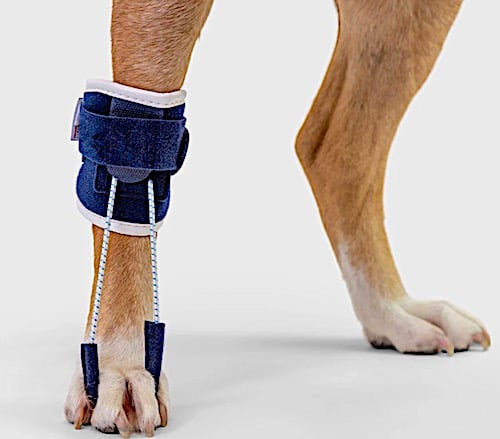 Pull (Knuckling Paw Brace) Pull (Knuckling Paw Brace) | Elastic sling | Elastic strap between the two middle toes pulls the toes up; keeps digital flexor tendons stretched; paw uncovered. | Mild–moderate proprioceptive-deficit knuckling; supervised wear. | baltousa.com |
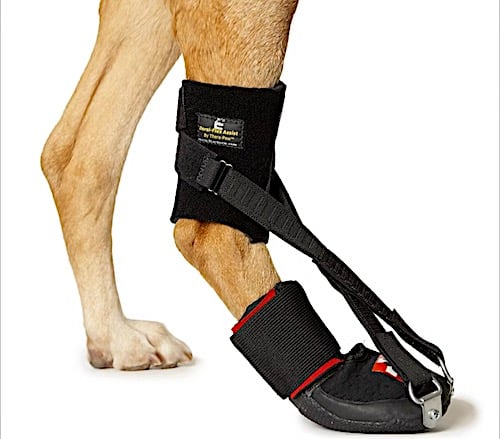 Dorsi-Flex Assist (DFA) Dorsi-Flex Assist (DFA) | Boot + strap | Padded boot + tibial cuff + elastic straps assist tarsal flexion and digit extension without immobilizing joints. | Moderate–significant (>50% of steps); needs functional hip/stifle. | therapaw.com |
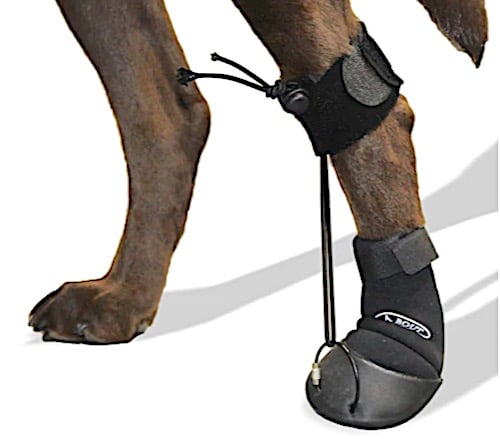 Toe’sUP Anti-Knuckling Aid / Walkaboot Toe’sUP Anti-Knuckling Aid / Walkaboot | Boot + strap | Rubber-soled 2-in-1 boot with paracord-and-toggle lift; cradles the paw without splitting the toes. | Mild–moderate knuckling in an active dog wanting paw protection plus lift. | walkaboutharnesses.com |
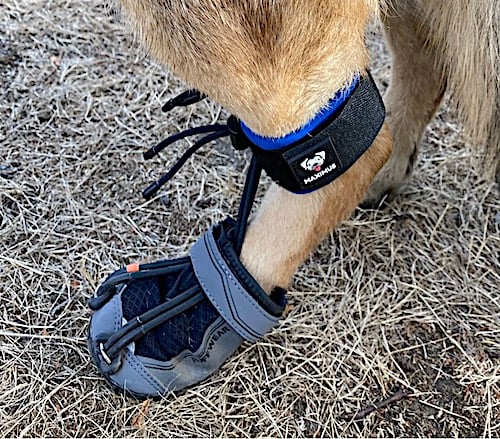 PawsUp / PawsUp SuperFlex PawsUp / PawsUp SuperFlex | Boot + strap | Grip-soled boot with 1 (PawsUp) or 2 (SuperFlex) elastic de-knuckling cords; rated for extended/all-day wear. | Light–moderate; dog can correct paw but scrapes nails/skin; tolerates longer wear. | maximusskates.com |
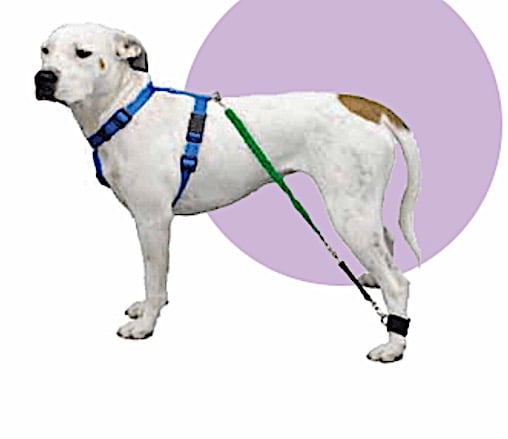 Biko Progressive Resistance Bands Biko Progressive Resistance Bands | Whole-limb (resistance) | Ankle cuffs to a harness via graded elastic bands; recoils the limb forward. No toe-lift element. | Bilateral hindlimb weakness; pair with a boot or toe-up aid. | animotionproducts.com |
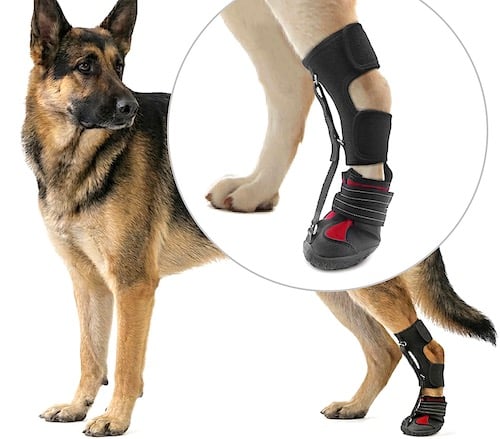 Toe-Up Correction Boot / No-Knuckling + Ankle System Toe-Up Correction Boot / No-Knuckling + Ankle System | Boot / modular | Toe-up correction boot; modular no-knuckling boot + ankle-brace system. | Newer entrant; mild–moderate knuckling. | pawpattz.com |
| FORELIMB DEVICES | ||||
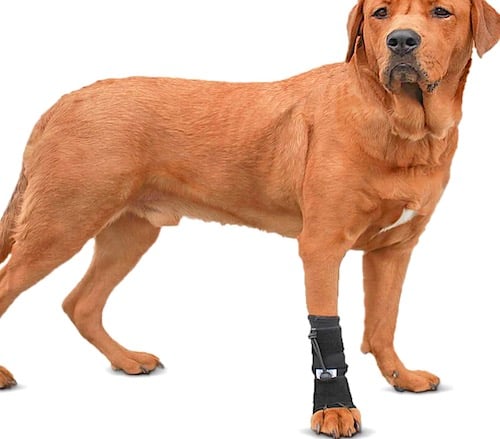 Front No-Knuckling Training Sock Front No-Knuckling Training Sock | Training sock (reflex) | Reflex cord loop sized for the forelimb; touch-fastener cuffs above and below the carpus; paw uncovered. | Mild front scuffing; dog can extend elbow/advance limb; 2–5 min bouts. | walkinpets.com |
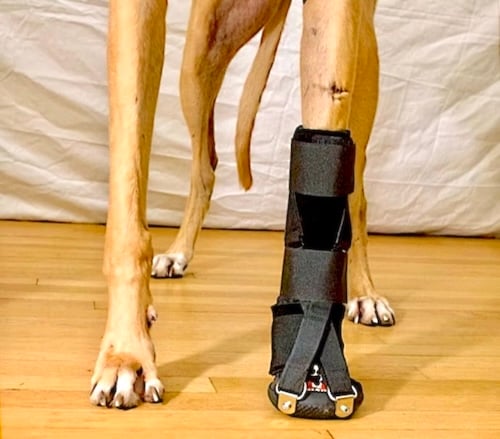 Forelimb Dorsi-Flex Assist Forelimb Dorsi-Flex Assist | Boot + strap (custom) | Antebrachial (carpal) cuff + treaded boot + nylon/elastic straps; stabilizes carpus, assists digit extension. | Brachial plexus avulsion, radial-nerve palsy, distal forelimb weakness. | therapaw.com |
Why strap configuration matters
At first glance, many boot-based toe-up devices appear to work in the same way. Elastic tension helps lift the toes or paw to clear the ground during swing phase. But the configuration of those elastic straps can significantly influence how force is directed through the limb.
Single midline strap
Most devices use a doubled elastic strap positioned along the midline. This configuration primarily assists movement in the sagittal plane, helping to lift the paw. For pets with mild foot drop and relatively neutral limb alignment, that may provide all the assistance needed.
Dual criss-cross straps
A dual/doubled elastic strap design works differently. Two elastic straps originate from the medial and lateral sides of the paw, cross one another cranially, and then attach to the metatarsal cuff. This opposing oblique, figure-8 configuration provides dorsiflexion assistance while also helping guide rotational movement.
This distinction matters in dogs with moderate+ neurological deficits where the paw may drag but also rotate. The criss-cross toe strap configuration can help guide the paw toward a more neutral position during ambulation. The functional difference is not simply the amount of elastics force produced but the direction in which that force is applied.
Both single-and dual strap systems can store and release elastic energy efficiently. However, dual straps add a small amount of weight and complexity. For a patient with profound weakness, even a slight increase in distal weight may matter. As with every rehabilitation device, the best design depends on the individual.
A note about forelimb devices
Forelimb toe-up options have expanded although more slowly than it has for the hind limb. The forelimb presents different design challenges. Patients with nerve injuries may be flaccid or hypertonic, or may have contractures. Contractures of the carpus and/or digits can make OTC products difficult to fit. In most cases, the device must not only lift the toes but also help stabilize the carpus.
The clinician must also determine whether the dog can still advance the shoulder and extend the elbow. If proximal limb advancement is absent, lifting the paw alone will not restore functional gait.
For these reasons, patients with forelimb injuries are more likely to require custom modification, an “open-top” boot design, and/or static toe straps.
What about cohesive wrap and kinesiology tape?
Cohesive wrap (e.g., VetWrap®) and kinesiology tape (e.g. RockTape®) are sometimes used to address paw dragging, but work through difference mechanisms.
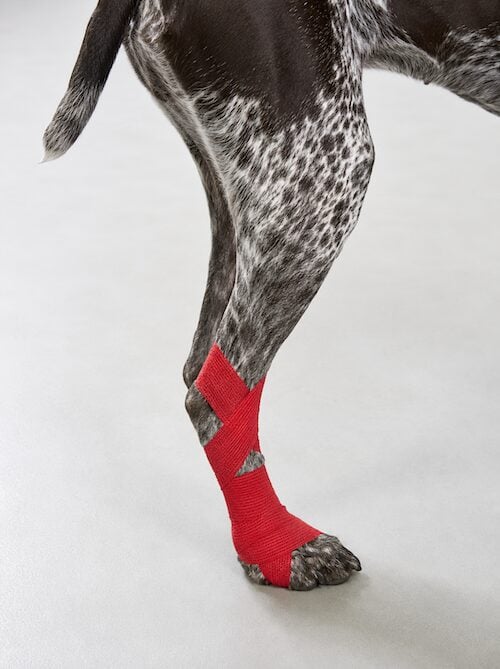
A cohesive wrap is typically applied in a figure “8” pattern, beginning around the toes, criss-crossing cranially, and wrapping just above the tarsus. This configuration provides gentle mechanical lifting of the toes and encourages tarsal flexion. It is an excellent option for therapeutic exercise sessions, short walks, or as a simple in-clinic trial to determine whether a patient is likely to benefit from a toe-up device or whether the patient requires more proximal support.
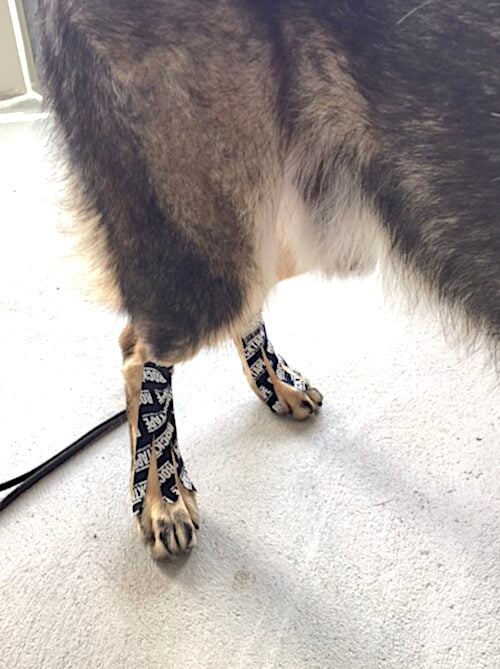
Rather than mechanically lifting the paw, kinesiology tape works to provide proprioceptive input that may enhance a patient’s awareness of limb position and facilitate neuromuscular activation. Unlike cohesive wrap, kinesiology tape is often left in place for several days, allowing the patient to receive ongoing sensory feedback during normal, daily activity.
Although studies are limited, some rehab professionals report encouraging results. Dr. Matt Brunke, a board-certified specialist in veterinary sports medicine and rehabilitation, described cases in which dogs with degenerative myelopathy showed less paw scuffing while kinesiology tape was applied to the dorsal aspect of the paw. When the tape was removed, the scuffing returned. His observation suggest that, in selected patients, therpeuti taping may enhance proprioceptive awareness and gait. See full article.
What does the evidence tell us?
While high-quality veterinary studies evaluating individual toe-up devices remain limited, but the overall evidence is encouraging. Human research on dorsiflexion-assist devices consistently demonstrates improved foot clearance and gait efficiency. It also shows that more assistance is not automatically better. Excessive assistance can alter gait mechanics, reduce normal muscle activity, and change how the limb moves.
The lesson translates well to veterinary rehabilitation in that the correct amount of assistance, applied at the right time, matters.
Veterinary rehabilitation research also supports the larger context in which toe-up devices are used. Dogs with degenerative myelopathy receiving regular physical rehab have demonstrated better outcomes than dogs receiving little to no therapy. Assistive devices including toe-ups are commonly included as one component of this multimodal care.
A toe-up device should not be viewed as a replacement for rehabilitation. It is a tool that may help a patient participate more effectively in therapeutic exercise, reduce repeated trauma, improve paw clearance, and maintain mobility for longer.
Device fit and weight, patient tolerance, skin integrity, diagnosis and prognosis, and the ability to advance the limb all influence the result.
How I choose the right device?
Rather than asking which brand is best, I begin with a few functional questions:
- Can the dog still advance the limb? Toe-up devices assist the distal limb but do not compensate for the inability to flex the hip or stifle (for hind limbs) or advance the shoulder or extend the elbow (for forelimbs)
- How much toe lift is needed? The goal is to provide the least amount of assistance that restores functional paw placement.
- Is the primary need proprioceptive cueing, mechanical assistance, or both? While some devices are intended to stimulate awareness of paw position, others mechanically lift the paw. Boot-based systems also protect the paw and nails but reduce sensory input.
- Is the condition improving, stable, or progressing? The right device today may not be the right device several weeks from now. In cases where the condition changes, adjustability and the ability to modify a device becomes important.
- How long with the device be worn and in what environment? A lightweight training aid may be ideal in the clinic but impractical for outdoor use. A protective boot may be appropriate on pavement but unnecessarily heavy for indoor wear.
Clinical notes
Use the least amount of assistance needed to restore functional paw placement so that the patient continues to maintain (or improve) strength.
Lighter devices are almost always preferred for pets with weak limbs.
If the pet is wearing the device for long periods, check the skin several times per day.
Never leave devices on overnight and monitor the skin several times per day, paying particular attention to the interdigital spaces and bony areas.
One type of device may not be enough – some pets require more assistance at certain times than others. Others benefit from proprioceptive cueing during therapeutic exercises but need a protective boot for outdoor walks.
Neurologic patients change so reassess frequently. Today’s ideal device may not be the right device in a month.
Most pets with toe-up devices do best when we’re able to help them offload. Well-fitting, wide-based, harnesses are often recommended when using distal assistive aids.
Bottom line
Toe-up devices have evolved tremendously over the past two decades. We now have solutions for both forelimbs and hind limbs, ranging from simple taping techniques to custom dorsiflexion assistive boots. The best device isn’t necessarily the newest or most expensive; it’s the one that safely restores function while encouraging the patient to continue using the limb. When combined with a rehab program, these devices can make a remarkable difference.