

Hind end weakness in dogs is a common mobility issue seen by both veterinary professionals and pet parents.
Weakness can appear suddenly or progress slowly, and it can be caused by a range of orthopedic and/or neurological diseases. When a dog begins scuffing their toes the instinct is to find a device that will protect their feet. But it’s important to notice what else is going on. For example, if a dog is collapsing at the hocks, knees, or hips, then dog boots will protect the paws but can also lead to more problems walking. For example:
- Adding a toe-lifting boot to a dog that is already collapsing at the hock (tarsus) will actually increase flexion at the tarsus, shift weight further behind, and making the dog more unstable.
- Adding a toe-up to a dog that’s very weak throughout the hind end and leg, may increase paw dragging since the toe-lifting boot creates more weight on the paw. If this dog is walked using a supportive chest harness, then uses the toe-lifting device during these walks will help the dog place the foot better and prevent knuckling.
This is why diagnosis and gait assessment are so important before selecting an assistive aid.
Choosing the right device begins with understanding why the weakness is occurring and where along the neuromuscular chain the problem originates. There is much information written on the causes of hind end weakness (e.g., IVDD, DM, FCE, hip dysplasia) but the aim of this article is to provide a resource guide of devices that improve gait and figure out how to choose the one that will best help the dog. Having been in the field of veterinary rehabilitation for over 20 years and also the pet parent of dogs with hind end weakness it can be confusing knowing what to use and how to help your struggling pup to get around. My most recent dog, Moozie, had a severe neurological disease. When he was initially diagnosed, I was told he had 12-18 months left with us. With what I had learned over the years, and with the help of the rehab community, Moozie lived happily for another 8 years. With an accurate diagnosis, a targeted rehabilitation program, and the right assistive devices, many dogs can maintain mobility and quality of life far longer than previously possible.
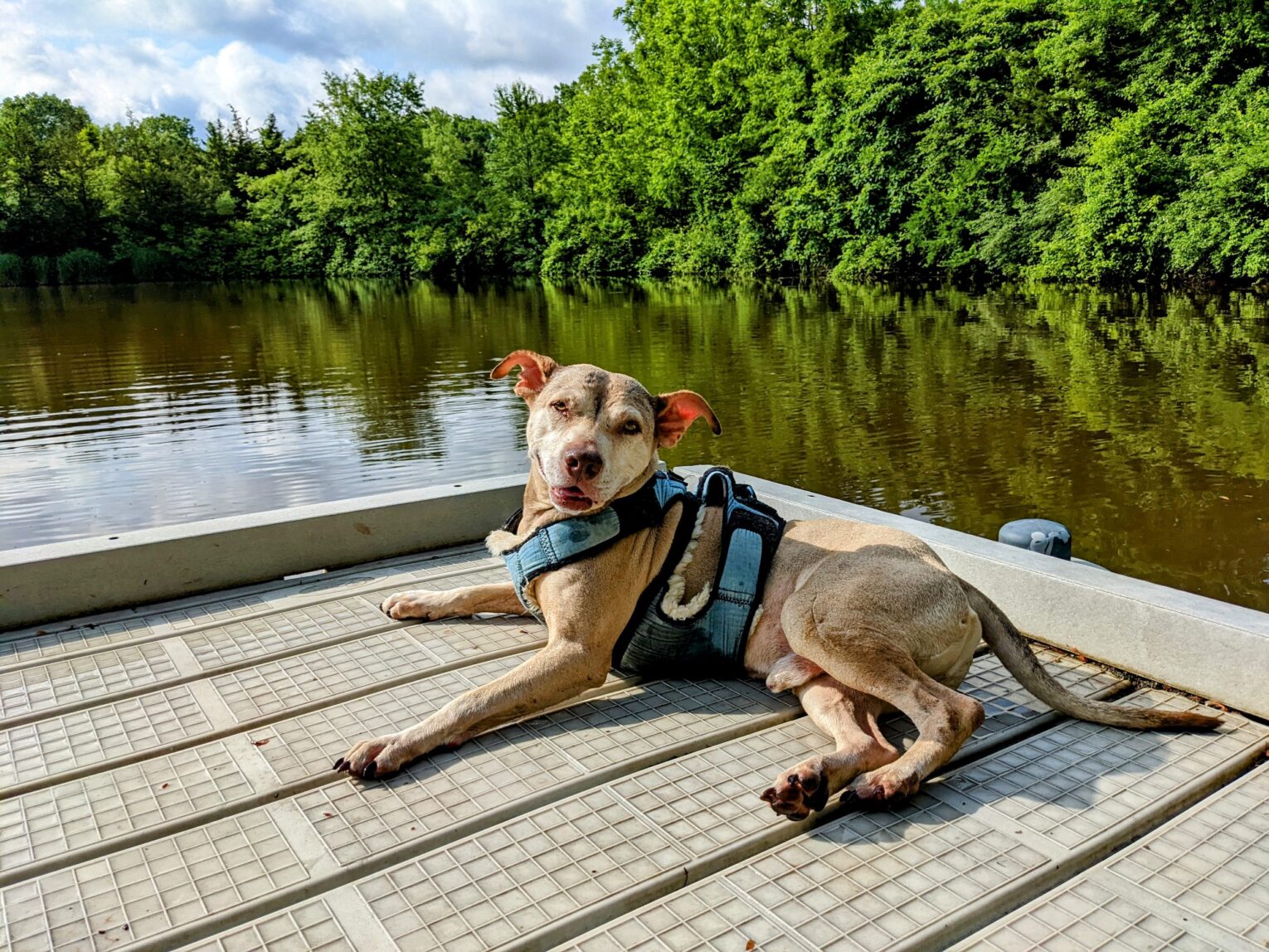
Moozie, at 9 years old. Nearly blind and deaf and unable to stand independently, yet enjoying a car ride and an assisted walk to his favorite spot on the dock.
Step 1: Where Does the Weakness Start?
After diagnosis, a critical next step in choosing the right device is determining where the weakness starts.
For example, if a dog is scuffing their toes or knuckling, the weakness could originate anywhere between the spine and digits. Two dogs may show identical toe abrasions but require different solutions depending on where the weakness is originating and the progression of the disease process. Selecting the wrong device can make the problem worse.
Step 2: Rehab and Muscle Maintenance
Regardless of the underlying condition, rehabilitation therapy plays a critical role in maintaining mobility.
Some goals of rehabilitation include:
- preserving muscle and preventing muscle loss
- maintaining range of motion
- improving balance and coordination
- preventing secondary injuries
Common rehabilitation techniques include:
- targeted strengthening exercises
- balance training
- neuromuscular electrical stimulation
- underwater treadmill therapy
Nutritional support is also essential for these dogs. For example, Myos supplement helps to maintain and build lean muscle mass in dogs. Maintaining muscle is especially important for dogs with progressive neurological disease, where strength can extend mobility and independence.
Step 3: Choosing the Right Assistive Device
Regardless of the underlying condition, rehabilitation therapy plays a critical role in maintaining mobility.
Assistive devices fall into several categories:
- Postural and Core Support Devices
- Support harnesses are often the first step in postural support and mobility assistance, especially when a dog simply needs help standing up or maintaining balance. Harnesses allow pet parents and veterinary staff to help offload dog’s the weight when rising, walking, or navigating stairs. If a pet parent can handle the weight, support harnesses are essential for dogs with hind end weakness. Either hind end harnesses or comfortable, wide-based chest and core harnesses are best.
- Rear support harnesses, like the Balto Up Dog, help offload the hind limbs and are good options for dogs recovering from knee (stifle) or hock (tarsal) surgery or those starting to develop progressive, hind end weakness.
- Chest and core harnesses are essential for dogs with more moderate or severe weakness. Since these dogs needs more help and most often throughout the day, the harness needs to be one that’s comfortable enough to leave on the dog.
- Sometimes, stabilizing the dog’s core and improving posture can help support the dog, activate core muscles, and reduce knuckling. Examples of core support devices include:
- K9 Hip Align – This garment provides sensory feedback and increased awareness through elastic straps around the trunk and hips. This garment helps to improve muscle engagement and is ideal for dogs with hip dysplasia or more proximal weakness.
- Lucky & Loyal
- eqquibands
- Support harnesses are often the first step in postural support and mobility assistance, especially when a dog simply needs help standing up or maintaining balance. Harnesses allow pet parents and veterinary staff to help offload dog’s the weight when rising, walking, or navigating stairs. If a pet parent can handle the weight, support harnesses are essential for dogs with hind end weakness. Either hind end harnesses or comfortable, wide-based chest and core harnesses are best.
- Whole-Limb Mobility Assist Devices – Some dogs can support their weight when standing but don’t have enough strength to advance their entire limb to walk. In these cases, devices that assist the entire hind leg(s) may be your best choice. Examples include:
- Biko Bands – These are elastic resistance bands that attach between the ankle cuff (metatarsal) and a well-fitted chest harness. The elastic bands help bring the legs forward during walking
- Lucky and Loyal –
- Anti-Knuckling and Toe-up Devices – are useful for dogs with adequate proximal strength that are either scuffing their paws or are unable to place the foot properly. For these devices to be successful, dogs must be able to flex the knee and advance the limb(s). These devices can also be used with weaker dogs as long as they are walked and supported with a harness or wheelchair. See the Comparison Guide below for examples and details:
- Multiple Devices May be Needed – Mobility needs can change from day to day, and a dog say, can use a Dorsi-Flex Assist when feeling strong enough to advance the limbs, and Biko Bands on days when additional assistance is needed. This flexible approach allows caregivers to adjust support depending on fatigue, disease progression, or rehab needs.
To reduce the risk of purchasing equipment that ultimately does not help the dog, simple trial or mock-up devices can be created. Mock-up devices help determine:
- where the weakness originates
- how much assistance the dog needs
- whether a specific product will improve gait
For example, using theraband or theratubing along with vetwrap can help mimic a toe lift device and a limb advancing device. Trial devices reduce the risk of purchasing equipment that ultimate
- Theraband
- Theraband or theratubing attached to a harness
When Moozie was initially diagnosed, I was told he had 12-18 months left with us. With what I had learned over the years, and with the help of the rehab community, Moozie lived happily for another 8 years. With accurate diagnosis, a targeted rehabilitation program, and the right assistive devices, many dogs can maintain mobility and quality of life far longer than previously possible.